Accessibility Tools

The Parkland's most up-to-date source of local news.

In a joint news release yesterday, the Provincial and Federal governments announced several enhancements to Manitoba's AgriStability program, including waiving 2025 late filing penalties for producers in flood-impacted areas. 

Ron Kostyshyn, Dauphin MLA and Manitoba's Agriculture Minister, recently attended a meeting in Halifax with most of Canada's Agriculture Ministers, and Federal Agriculture Minister Heath MacDonald. Top of the docket: programs like AgriStability. 

"The first thing that was brought up on the agenda, as far as all Agriculture Ministers across Canada, business risk insurance programs need to be enhanced moving forward...AgriStability, Manitoba Crop Insurance, AgriInvest, all those are part of the business risk insurance program. There is no doubt, there is no doubt that that needs to be enhanced," said Kostyshyn. 

In addition to waiving late filing fees for 2025, the Federal and Provincial governments are also increasing the maximum interim payement made available to farmers enrolled in the 2026 AgriStability program in Manitoba, from 50% to 75% of the estimated final payment. The change allows for farmers to receive funds sooner once they complete their application forms. Top-up payments to the 75% mark will go out to producers who have already received interim payments. 

The biggest news from the announcement: Manitoba has implemented late participation for the 2026 AgriStability program year, allowing producers who did not enroll by the deadline on April 30th to still participate in the program, though there will be a reduced benefit for late participation. Producers who want to participate late will have to pay the upfront fee before submitting their 2026 application. 

"This is an opportunity for producers that, through the AgriStability program, maybe felt that wasn't accountable, maybe this is an opportunity, they have an opportunity to get back into the AgriStability program," said Kostyshyn. 

Even before widespread flooding damages across the region, it was already shaping up to be a rough year for Manitoba's producers. Rapidly increasing input costs, and unpredictably volatile markets led to a lot of uncertainty early on. 

"The dollar value continues to rise, and I think this year is a prime example, where input costs continue to rise for the producers. And obviously, at the end of the day, the margins are become more and more tougher for the producers," said Kostyshyn. 

Kostyshyn has constantly said that business risk insurance programs, like AgriStability and Manitoba's many other programs, need to be the first line of defence when things go bad for producers. This announcement is proof that several of Canada's other Provincial Agriculture Minsters, and the Federal Agriculture Minister, feel the same. Click here to visit the Federal Government's AgriStability webpage for more information about the enhancements. 

Around 2:00 PM on Wednesday, Manitoba's Emergency Management Organization issued an emergency alert to inform Manitobans that most of the Province's 911 services were unavailable. 

Elise von Scheel, Senior Media Relations Manager with Bell MTS, said the outage was caused when a fibre cable was cut by a third-party doing construction, which affected Brandon's Public Safety Answering Point. Backup services functioned as intended. Full emergency call serrvice was brought back online around 3:20 PM. 

"Backup systems were brought online throughout the afternoon to route calls to emergency services while technicians addressed the outage," said von Scheel. 

The Brandon Public Safety Answering Point also had their own backups, which allowed them to track and callback 911 callers. Bell MTS thanks Manitobans for their patience while they worked to fix the damaged infrastructure. 

Ron Kostyshyn, Dauphin MLA, has been working quitely behind the scenes when it comes to making sure Dauphin and the area is looked after. Recent flooding damages in the Parkland, especially in Swan River, was bad. Kostyshyn was floored by the widespread infrastructure damage, and especially damages to crops. 

One of the Province's solutions was the Manitoba Flood Recovery Program, designed to help communities in the hardest-hit areas. However, some of those hard-hit communities don't make the list. Notable exclusions are both the City and RM of Dauphin, Gilbert Plains Municipality, Grandview Municipality, Mossey River Municipality, and the Municipality of Ste. Rose. 

"The Swan River and Minitonas area, and that geographic area, was the first geographic area to be quite evident of overland flooding and the devastation that happened...I continue to lobby on behalf of the geographic area, of the devastation that took place, and we will continue to lobby...I'm confident that the cabinet will have an announcement soon," said Kostyshyn. 

Kostyshyn assured 730 CKDM NewsNow that he is working to get hard-hit communities in the area he represents included, and expects answer from Legislature soon. 

"The discussion is ongoing, and I would just ask the residents in the secondary flood area to be patient into the near future...the book is not closed on that subject. We will continue, I will continue to lobby the appropriate departments to move forward with a similar situation," said Kostyshyn. 

According to Manitoba Agriculture, the hardest-hit communities in the Parkland were San Clara, Minitonas, and Ste. Rose. San Clara received an estimated 380-460mm of rainfall between May 1st and July 19th, and both Minitonas and Ste. Rose received approximately 300-380mm in the same period. 

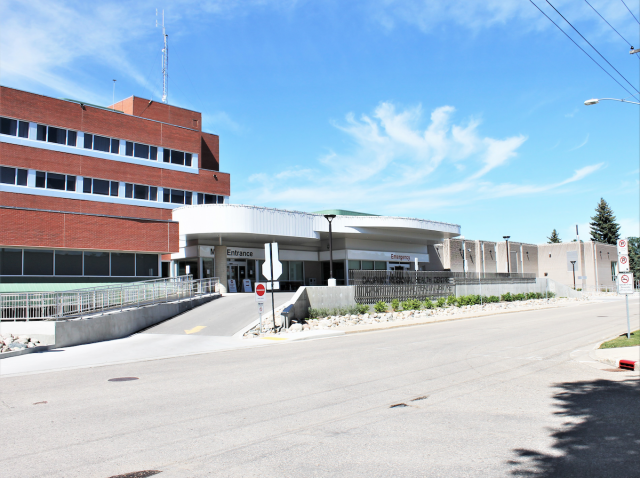
Another concern that Kostyshyn has is the Dauphin Regional Health Centre's closure. He said the community is used to having it as a service, and said PMH has been doing a lot of work. 

"Dauphin's hospital is a centralized medical service, and once you lose that, it has a number of negative spinoffs...I think sometimes the misconception is, nothing is being done. Whether it's being spread by other individuals saying that nothing is being done, that is not true, they are doing as much as they can do," said Kostyshyn. 

Kostyshyn said he will be seeking to make partnerships with various groups to try and expedite the Dauphin Regional Health Centre's progress, and to get parts of his riding included in the Manitoba Flood Recovery Program. 

"We are doing as much as we can, as fast as we can, and we're going to partner with whoever we have to, to get that hospital back into operation," said Kostyshyn.

In his life of living in the Parkland, Kostyshyn said he's never seen flooding this bad, and the effects of both the flooding damage and the DRHC's closure will be felt for a while.  

First, the RCMP announced that their uniforms will be getting updated. Now, their rides will get a fresh coat of paint - or rather, a new look entirely. 

Camille Boily-Lavoie, RCMP Media Relations Communications Officer, said the new look for both officers and their vehicles is meant to show their commitment in being a professional and approachable modern police service. 

"The RCMP is introducing a new look for both police vehicles and uniform – these updates are part of our ongoing commitment to modern policing, officer safety, and keeping communities safe," said Boily-Lavoie. 

As for when you can expect to see the updated RCMP vehicles, that will vary widely across all of Canada, as it's a nation-wide rollout. Current vehicles will remain in service, and will be replaced gradually. Boily-Lavoie said the goal is to start seeing the updated vehicles on the road this summer. Plus, all things considered, the upgrades aren't very expensive. 

"This approach ensures responsible use of public funds while we transfer to our updated look...preliminary estimates indicate an additional cost of approximately $1,600–$2,000 per vehicle over the cost of the previous vehicles, depending on the model," said Boily-Lavoie. 

RCMP plans to share updates, as well as pictures of the new vehciles, on their social media to familiarize people with their new look. The last time the RCMP updated their vehicles in this way was 1994. 

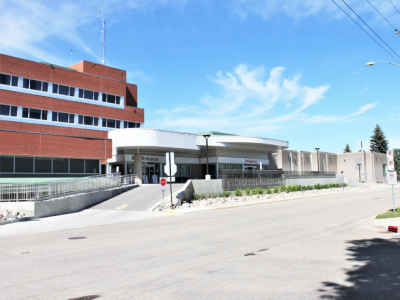
Earlier today, Prairie Mountain Health released an update on the Dauphin Regional Health Centre. They plan to make releases similar to this one on a weekly basis, to keep the community informed about their ongoing efforts to both repair the DRHC, and address Dauphin's healthcare challenges. 

Treena Slate, PMH CEO, said over the past few weeks, their contracted assessors and engineers have been working tirelessly to get a full picture of the damages. Based on images in the latest news release, the damage to the DRHC is much worse than most people thought, and will definitely take time to repair. 

"Our engineering contracted firm that we're working with needs to take a full evaluation of the building and clearly understand the damage...one of the main barriers to getting that concluded is they can't yet access the crawl space, it is still full of water and silt, and so they are working to remove that so they can fully evaluate the wiring and the infrastructure in those spaces, to understand the degree of damage and what needs to be replaced," said Slate. 

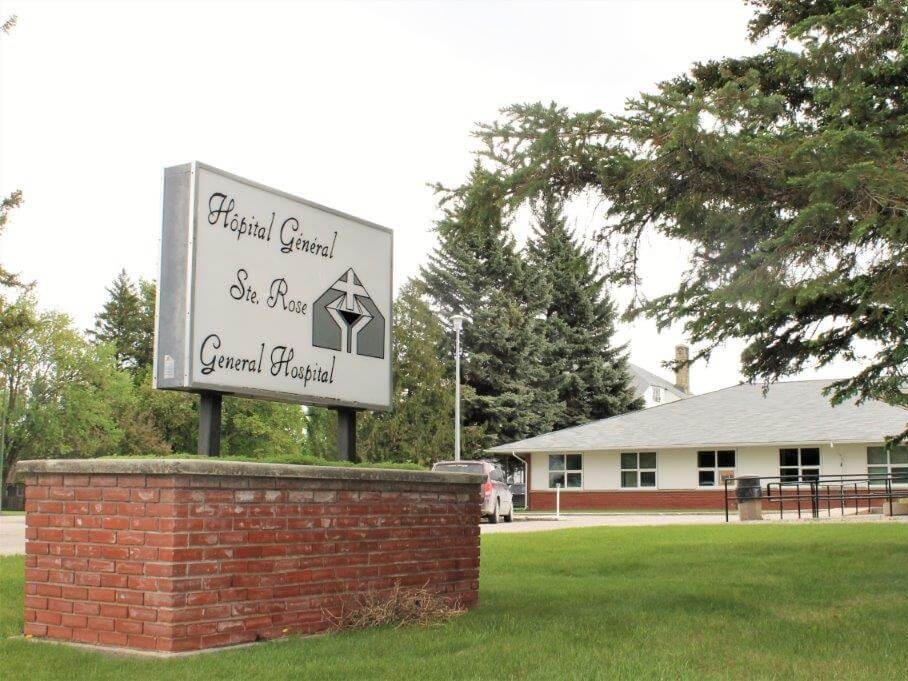
One of the main concerns from the community is there is no timeline as to when the DRHC will be reopened, or when basic healthcare services like diagnostic services or an emergency room will be made available within Dauphin. In the meantime, Prairie Mountain Health has increased hours and staffing at both the Ste. Rose Emergency Department and Grandview Emergency Department, but those are both still a considerable distance from Dauphin. 

Dr. AbdulRazaq Sokoro, Shared Health Chief Operating Officer of Diagnostic Services, said there are a lot of steps invovled in restoring even those basic functions to the community, and both PMH and Shared Health are actively working on those steps. 

"These services are being located within the community, so it has to be done in compliance with the Health Standards Act, but also with the [safety] standards, which means that the facilities in which we operate have to meet the safety requirements...it is our priority and we hope to have those in the next few [weeks], we don't have an exact concrete timeline, but that is something we are looking at, PMH and Government as well," said Dr. Sokoro. 

Still a concern from the community is the number of specialized services that the DRHC has, including cancer care and dialysis. PMH and Shared Health facilities that have those are even further away from Dauphin than Grandview and Ste. Rose, so travel is that much more of an issue. Slate said specialized services are also a very high priority, and have started to look at ways they can bring those back into the immediate vicinity of Dauphin. 

"We are looking at every possible option, including what would be possible in buildings in the community of Dauphin itself and the surrounding area, as well as mobile options to support those services...we have to consider safety first, and ensure that we're meeting clinical standards by providing those services, so it is not as simple as moving equipment over to a building in Dauphin, we have to ensure that the clinical standards are met in those environments, so much work, and clinical experts are involved in that planning," said Slate. 

The first few weeks after the DRHC's closure involved a lot of internal communications between Prairie Mountain Health and Shared Health, and other involved stakeholders. Going forward, Slate said she expects PMH to have weekly news releases, as a way to update the community about progress at the DRHC. 

"This community update that you received in writing today with the photos, that update will be provided on a weekly basis as we move forward, and we can give updates to the media accordingly," said Slate. 

With the closure of the DRHC also comes concerns that emergency response services or patient transfer services will not be as responsive, leading to increased ambulance wait times. Jason Little, Shared Health Chief Operating Officer for Emergency Response Services, said both PMH and Shared Health are aware of that concern, and have already taken numerous steps to mitigate the possibility of delayed response times. 

"We have repositioned STAR-7, the STARS Air Ambulance from Winnipeg to Brandon for this specific issue, we've also repositioned the Contracted Low-Acuity Truck, which is patient transport services, to Ste. Rose for those appropriate transports...we're doing everything we can to maintain those ambulances and staffing, so I don't think you'll see any breaks in coverage at all. 

Prairie Mountain Health is also planning to host a virtual town hall meeting on Thursday, July 30th, from 6:30 to 7:30 PM. Click here for more information on how to register. 

DRHC Town Hall

Assessments of the Dauphin Regional Health Centre's damages, as well as conversations within Shared Health and Prairie Mountain Health about restoring basic healthcare to Dauphin, are ongoing, and a very high priority. Click here to view Prairie Mountain Health's latest news release on the DRHC. 

On the morning of July 1st, Mark Kohan, CFO and General Manager of Vermillion Growers, woke up to calls about flooding at the greenhouse. But he couldn't get off of his own street because of the flooding, and lot of his staff couldn't make it in either for the same reasons. 

"Access to the site was pretty restricted in terms of roads washing out and things like that, so we did have a significant amount of water throughout the facility...the balance of the crop ended up being a total loss, we'll get resanitized, recommissioned, and then planted again as quickly as possible," said Kohan. 

For Kohan any many other Parkland farmers, that scenario is worse than a nightmare, but it became a scary reality. Despite knowing the crop was a loss, Kohan and his staff have held their heads up and worked through it, getting the greenhouse ready for the next crop. 

Kohan said he's very lucky to work with the staff he does. They have been all-in on getting back to normal since the flooding, and have all been positive throughout the process. 

"All of the supervisors, but even all of the staff definitely pitched in as soon as it was safe to do so. We've received tremendous support from other local businesses," said Kohan. 

Getting back to normal is going to be a tough process, but for Kohan and his staff, it's important to take things one day at a time. Even with the scale of agricultural losses across the Parkland, Kohan said he's happy to see the region supporting each other. 

"Every day is a new day, and everybody need to keep moving forward. It's a positive industry, it's very important for us to keep food production local, and working together and getting back to what will be our new norm hopefully as soon as possible," said Kohan. 

Though he doesn't yet have a timeline on when he expects Vermillion's next crop to be in the ground, he's been very direct with his staff and stakeholders, and feels the good internal communication has greatly helped. 

Dauphin Co-op has always been a champion of giving back. They're once again giving back in a big way to two Dauphin projects: the Little Neighbours Play Space, and the Dauphin Neighbourhood Renewal Coroporation. 

In Dauphin Co-op's news release, DNRC Executive Director Tammy Chief said the Little Neighbours Play Space gives families a safe, inclusive, and sustainable indoor play environment, and Dauphin Co-op's donation will help them increase the opportunities for Dauphin kids. 

"Dauphin Co-op's generous $2,500 contribution is helping bring this vision to life and demonstrates the power of local partnerships in creating lasting benefits for children, families, and the broader community," said Chief. 

That's not the only way they're giving the DNRC a hand: they're also donating $2,800 worth of paint for their Transitional Housing Project, through Co-op's Communities in Full Colour Program. Stephen Bunka, Dauphin Co-op's Building Divison Manager, said being able to support organizations in such a meaningful way is a privilege. 

"“Strong communities are built by supporting one another. We believe the spaces individuals live in can inspire confidence and healing...we are proud to play a small part in helping people move forward with confidence and dignity," said Bunka. 

Dauphin Co-op says their mission is to build relationships with members, team members, and communities, one interraction at a time. They say the level of community support they're able to provide is only because of their members. 

Late last month, the Watson Art Centre held their Annual General Meeting to talk about how last year went, and their plans for this year, and even further in the future. They've now released a public report, detailing some of the specifics. 

Looking at last year's numbers, the Watson did considerably better. Notably, they had an average of more than 8 activities per week, and sizeably grew their social media following, adding more than 3,400 followers across their platforms, boasting 1.1 million content views. 

Some improvements to the Watson from 2025 included a new heat pump system, a newly-installed chairlift to improve accessibility within the building, and modernization of their backend operations, including their website. 

The Watson Art Centre also detailed some results of their recent community survey. Overall, the Parkland understands the important of the arts: the Watson averaged a 4.42/5 in Value to Community, and a 4.78/5 in Importance to Region. Plus, 34 of 37 respondents supported public support for arts and culture, and 32 of 37 supported municipal taxpayer support for the Watson. 

For more details about their public report, click here to view the report on their Facebook page. 

The City of Dauphin has installed a new pedestrian crosswalk and sidewalk on 1st Avenue SE, on the north side of Credit Union Place. 

Without a crosswalk, pedestrians were required to either walk from the parking lot across the street to the arena, or walk quite a distance to the nearest marked crossing. The new installation provides both ease-of-use, and an increase in pedestrian safety. 

The crosswalk features flashing pedestrian lights, to better alert drivers when someone is crossing the street. The City of Dauphin reminds drivers to always watch for pedestrians, and to stop when the flashing lights are on. Pedestrians are encouraged to use the designated crosswalk, and activate the lights before crossing. 

The latest Manitoba Agriculture Crop Report highlights how warm temperatures in the Northwest region have continued to help advance crop, despite some standing water still remaining in low-lying areas. 

Areas that have been under excess moisture still show symptoms of stress. Damage assessment and infrastructure repair continue across the region, and field access is still a challenge in some areas with washouts. 

Herbicide and fungicide applications continue where necessary stages have been reached, though there are still challenges with timely applications, because of excess moisture, high temperatures, and high winds. 

Fall rye and winter wheat are looking mostly good in the Northwest, with most crops in the milk stage. Though, there are some report of true armyworm in some fields. Crop stages still range in spring cereals, from tillering stage to most advanced crops in early milk stage. Areas under continuous excess moisture still show signs of stress. 

Field peas are now into the R2-R3 stage. Areas that have been constantly wet still show signs of excess moisture, though fields that did not experience excess moisture are looking good. 

Canola fields range in stages, from rosette stage to the earliest fields nearing flower completion. While some crops appear healthy, fields under excess moisture are thin and starting to stress bolt. Soybean crops continue to develop well across the region, in large part because of warm temperatures. Most crops are in the R1 stage, with the remainder closely behind. 

Manitoba Crop Alliance recently announced the winners of their 2025-26 High School Bursary. There were six winners province-wide, including two from the Parkland. 

Katie Gulak of Gilbert Plains will be studying Agribusiness at Assiniboine College in Brandon, and Aiden Brunel of Ste. Rose will be heading west to Olds College in Alberta to study Agriculture Production Management. Andrew Enns, Research and Production Coordinator with MCA, said both of them are incredibly deserving of the bursary. 

"They're two promising high school graduates from the area, they're both going off to post secondary education. Katie is going to be entering an Agribusiness program at Assiniboine College, hoping to learn things about farm management, how to react to changing markets, and help make her farm more efficient and sustainable. She hopes to bring that knowledge back to her family farm...and Aiden is off to Olds College in Alberta, and he's going to take a two year Ag Management diploma, and he's also interested in brining that information back to his family farm, where he hopes to become the fifth generation on the farm, and introduce some of the new things that he learned," said Enns. 

The bursary is for $1,000 to help graduating high school students entering programs that will help their agricultural skills. Part of the selection process involved written letters, submitting high school transcripts, and references, showing Katie and Aiden are serious about using their post-secondary knowledge to help their family farms. 

Manitoba Crop Alliance also has a bursary for students already in post-secondary agriculture programs. Enns said being able to help out the next generation of Manitoba farmers and ag producers is one of the things MCA takes a lot of pride in. 

"Really the main purpose of the bursary is to inspire and support the next generation of farmers and agricultural professionals, to make sure that agriculture has a bright future in Manitoba, and really invest in the success and future of Manitoba agriculture," said Enns. 

If Katie Gulak and Aiden Brunel are just two of Manitoba's aspiring agriculture professionals, then it's safe to say the next generation of agriculture is in good hands.